
A carved house at Shangnyu, a conversation with a Konyak woodcarver, and the border landscape at Longwa offer quite different ways into Mon. Leave room for all three. The district is often introduced through one striking photograph, but its villages, traditional leadership and present-day cultural life deserve more than a hurried excursion from town.
For a first visit, allow three nights for Mon town and two substantial village days. Four nights gives you room for Veda Peak or a slower cultural visit. Longwa may be the place that first caught your attention; Shangnyu and the Konyak Heritage Complex at Leangha can help you understand the wider district. A local guide is particularly valuable here, both for introductions and for the stories behind what you see.
Understanding Mon
Mon occupies northeastern Nagaland, adjoining Assam, Arunachal Pradesh and Myanmar. The name refers both to the district and to its headquarters town. Longwa, Shangnyu and Leangha are separate villages, so use the village name when arranging your room, driver or meeting point.
The district is closely associated with the Konyak community and is often called the land of Anghs, or traditional chiefs. An Angh’s residence, a village council space, a church and a heritage complex each reveal a different part of community life. They also have different custodians. Arrange your visit with someone who can introduce you properly and explain what each place means today.
Mon works particularly well as part of a northern Nagaland journey. It does not require a detour through Kohima: approaches through Assam may fit your arrival better. Decide on your gateway and the direction of your onward journey before booking individual nights. That leaves more of the holiday for the villages and less for retracing the road.
Places to visit
Mon town
Give yourself an easy arrival afternoon in town. A meal, a short walk and a conversation with your host are enough after a long road journey. If shopping or markets interest you, ask where to go that day rather than planning around an unconfirmed market schedule.
Town makes a useful base when your village outings lie in different directions. Keeping the same room also lets you rearrange a day if weather or a host’s commitments change. Leave some time for the Mon of the present: shops, churches, students, artists and local businesses are as much part of the place as its older buildings. A rest afternoon need not be a wasted afternoon.
Longwa village
Longwa’s setting on the India–Myanmar boundary gives it an unusual place in Nagaland’s geography. The Angh’s house is described in the district account as standing across that line. A guided introduction can make sense of the relationship between the village, its traditional leadership and a border that runs through a lived-in landscape.
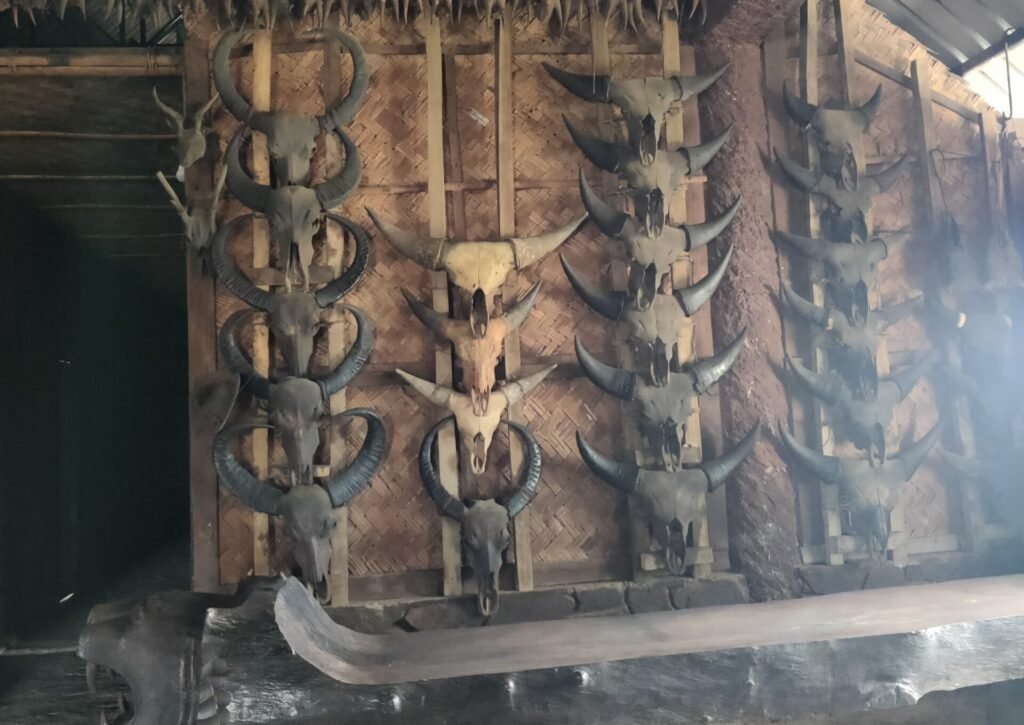
Choose a visit that leaves time for the hosts’ explanation and a village walk. If you are interested in carving or architecture, say so when making arrangements; a conversation built around that interest will be more rewarding than arriving with a list of photographs to collect. The Angh’s residence is also a home, and the occupants decide which rooms and objects visitors may see.
Arrange the permitted route with a local host and get current border-access advice from Mon administration or police. A visit to Longwa does not authorise crossing into Myanmar. Remain within the area allowed for your visit, regardless of what older travel accounts say about moving across the boundary. If access is restricted, spend the day elsewhere in the district.
Portrait photography needs the person’s own agreement. Ask before taking the picture and explain if you intend to publish it. Older residents are under no obligation to pose, discuss their past or show tattoos; a guide cannot promise that on their behalf. If a cultural session has been arranged for visitors, agree its scope and payment openly beforehand.
Shangnyu village
At Shangnyu, the chief’s house, carved structure and memorial stones draw attention to the way history is held in buildings and objects. Come with a guide or custodian who can explain their significance. The house’s great age is part of the local account; descriptions of it as centuries old should be understood as tradition rather than a precisely dated architectural finding.
This is a good choice for travellers who enjoy looking closely. Ask about the carving, the role of the stones and how the village cares for its heritage. Their meaning matters more than how many objects you can fit into a photograph. Leave fragile surfaces untouched and accept the custodian’s preferred route through the site.
Allow Shangnyu its own place in the itinerary. An agreed walk and, where available, an arranged meal give the visit a comfortable shape. Adding it at the end of a long driving day is unlikely to leave much time for the explanations that make it worthwhile.
Konyak Heritage Complex at Leangha
Leangha brings a newer chapter to a Mon visit. The Konyak Heritage Complex was inaugurated on 5 April 2025 during the Aoleang celebration, making it a useful counterpoint to the older heritage of Shangnyu. It is a place to enquire about contemporary efforts to present and sustain Konyak culture.
Ask your guide or the village which parts are receiving visitors and whether someone can show you around. The inauguration record does not establish daily opening hours or a programme of performances. Once a visit is arranged, let its location and the time needed there determine whether it fits alongside another outing or deserves a quieter day of its own.
Veda Peak
For a change from the village circuit, consider Veda Peak. The district identifies it as Mon’s highest peak and places it roughly 70 kilometres from the headquarters. Give it a separate day: the appeal is time in the wider hill landscape, not squeezing another viewpoint between appointments.
Choose the outing with your guide after discussing the road approach, the point where walking starts and the likely terrain. Clear weather will make a difference to the views, but the route and return journey matter just as much. Establish any local permission, a turnaround time and whether you need to carry lunch. Water, grippy footwear and a weatherproof layer belong in your day bag.
If rain or poor visibility makes the approach unsuitable, keep the day for a craft visit or another village introduction. A longer Mon stay is worthwhile even without a summit outing; there is no need to make the whole journey depend on one view.
Konyak culture and respectful visits
Woodcarving is a rewarding thread to follow through Mon. Shangnyu and Longwa both appear in the district’s account of the craft, although a visitor session still needs arranging with a willing maker. Watching how a tool is used or hearing why a design was chosen can reveal far more than a quick look at a finished object.
If you hope to buy something, ask who made it, what material was used and how long the work took. Pay for substantial demonstrations as well as purchases, and seek a receipt for valuable pieces. Contemporary work made for sale is the clearest choice; leave old community objects and wildlife materials alone when their ownership or lawful provenance is uncertain.
There are differences between villages, including their dialects. Let those distinctions emerge through your guide’s account rather than expecting every stop to tell the same story. Traditional leadership, farming, Christian faith, education and new businesses coexist here. Historical conflict is part of the past, but it should not become a label for the people you meet today.
Courtesy need not make a visit awkward. Introduce yourself, follow your host’s lead and ask before entering a home, touching an object or raising a camera. Take particular care around worship, memorials and children. For interviews or commercial photography, make separate arrangements; an invitation to look around is not consent to film or publish someone’s private life.
Seasons and Aoleang
The cooler months after the monsoon through early spring are a useful starting point for a road-based holiday. Pack for cool mornings and evenings, with rain protection even outside the wettest season. If Veda Peak is important to you, leave flexibility in the order of your days so your guide can choose a more suitable weather window.
Aoleang, the principal Konyak festival, is associated with early April. It can give a Mon visit a lively cultural focus, but choose a particular village or public celebration before fixing the trip. The broad festival season and an organiser’s actual programme are different things.
Arrive before the celebration you most want to attend, and reserve accommodation once the dates are confirmed. Ask which events welcome visitors and when photography is appropriate. Keep another day for an ordinary village visit or a maker’s appointment: a busy celebration is enjoyable in its own right, but it may not leave space for a long conversation about a carving or a family history.
Getting there and border planning
Compare Assam gateways with Dimapur rather than assuming that an airport within Nagaland must be the best starting point. The district identifies Jorhat airport, Bhojo railway station for the Sonari approach, and Simaluguri for the Naginimora approach. Its transport guidance also mentions Dibrugarh and Dimapur airports. Look at the full transfer, the arrival hour and your onward route before choosing.
Ask your accommodation or operator to recommend the route for your dates. A late arrival in Assam may be better followed by a night there than a pressured drive into the hills. Travelling on from Mokokchung or Longleng also needs a real road plan; proximity on a map can be misleading.
Shared transport can suit flexible travellers. Confirm the departure counter, connections and luggage arrangements directly. With a hired vehicle, settle the route, waiting time, village detours and the driver’s overnight expenses in advance. Published bus and helicopter timetables may be old, so rely on a confirmed service for your travel date.
Use the official ILP portal and Tourism Department permit links to establish your entry requirements. Foreign travellers should confirm Protected Area Permit and registration requirements with the competent authorities. Border-area access is a separate question: obtain current advice for the exact route, carry your identification and permissions, and follow checkpoint instructions.
Accommodation and meals
A room in Mon town is the simplest base for a first visit with several village outings. The district directory names Paramount Hotel, Helsa Cottage and Aihan Homestay in town, and Helsa Morung at Tammong village on the Longwa road. It also includes government guest houses. These are enquiry leads from an older directory, not inspected recommendations or confirmation of current availability; government accommodation may have eligibility restrictions.
A village overnight makes sense when you have a confirmed host and would enjoy staying beyond the day visit. Compare the actual room and access with your needs: attached bathroom, hot water, steps, blankets, electricity and meals. For accommodation outside town, make sure both you and the driver have the same pickup point and arrival instructions.
Meals are an opportunity to follow the season and the cook’s own preferences. The district’s cultural account mentions khalap, black tea, but there is no single menu that every Konyak household must serve. Ask what your host likes to prepare and explain allergies, vegetarian requirements and chilli tolerance beforehand. Preorder lunch on a village day so the meal can be part of the visit rather than a last-minute search for somewhere to eat.
Suggested itineraries
Allow separate time for your airport or railway transfer. The days below work best with daylight road travel and village visits arranged before you leave town.
Three nights for an introductory visit
Arrive on the first day, settle into Mon and meet your guide. Give the second day to Longwa if access is permitted, with a hosted walk and lunch. Use the third for Shangnyu; include Leangha only if the visit is confirmed and the route leaves enough time for both. Depart on day four with a generous road buffer. If Longwa is unavailable, your guide can use that day for another agreed cultural visit without changing the whole holiday.
Four nights with a landscape day
Add a separate day for Veda Peak, choosing its place in the itinerary after checking the weather and approach. Keep it away from a fixed departure. The extra night also gives you a useful alternative if conditions turn: time with a maker, a second village introduction or a quieter day in town.
An Aoleang-focused visit
Put the confirmed celebration at the centre of the stay, arriving the day before and leaving another day for heritage visits. If accommodation near the event is limited, ask the organiser which base is realistic before booking your car. Resist filling every gap with another drive; time to rest and enjoy the place will make the festival days easier.
Costs and practical preparation
The main budget decisions are your gateway transfer, number of vehicle days and choice of accommodation. Ask for an estimate that separates rooms, meals, guiding, transport and any heritage contribution or hosted session. Include waiting and driver expenses, and agree what happens to deposits if weather or access changes. A package should never guarantee a particular resident’s portrait or a private ceremony.
Carry cash for agreed village expenses, drinking water, essential medicines and a power bank. Save your host’s and driver’s details offline. Before a longer outing, settle fuel and meal stops and let your accommodation know where you are going.
For families or anyone who tires easily, one main village a day leaves room for breaks. Ask about toilets, seating and walking gradients. Travellers needing step-free access should request photographs of the room approach, bathroom and proposed village route: road access alone tells you little about steps inside a settlement. Discuss access to suitable medical help in advance if someone’s health needs make that important.
Keep a buffer before an important flight or train. Fresh road and weather advice is most useful just before a remote outing, when there is still time to change the plan comfortably.
Frequently asked questions
Does visiting Longwa allow me to cross into Myanmar?
No. A village visit does not authorise an international crossing. Follow the route and area permitted for you.
Must I travel through Kohima to reach Mon?
No. Assam approaches may fit your itinerary better. Compare the complete airport or railway transfer with an arrival through Dimapur.
Can I book a meeting with a particular elder?
You can ask for an introduction, but the person must freely agree. Their health, family commitments and wishes come first.
Should Veda Peak be part of every Mon trip?
No. Three nights of village and heritage visits can make a satisfying trip. Add Veda when you have an extra day and suitable conditions.
Sources and planning links
For background and updates: Mon District Administration, its profiles of Longwa, Shangnyu and Veda Peak, cultural background, transport guidance and accommodation directory; the Leangha inauguration record; and Nagaland’s festival calendar. Research checked 28 October 2026. Older directories provide leads rather than live schedules.