
Longwa’s border story may bring you here, but a conversation or a piece of carving can give the visit its lasting shape. This Konyak village in Mon district offers a chance to learn about local institutions, skilled work and life along a boundary that runs through the community’s landscape.
Give Longwa a dedicated day within a Mon-area journey, or stay with a confirmed village host for a slower visit. A good local guide helps turn a famous photograph into an introduction: who is willing to meet you, what can be visited and how the day can fit comfortably around village life. Settle border-area access before paying for the journey, then leave the visit time to unfold.
Where Longwa is and why it is well known
Longwa stands on the India–Myanmar boundary in the northern part of Nagaland. The Mon administration describes the Angh’s house as lying across the boundary and identifies the Angh as the village chief. That striking geography explains why the village is so well known.
There is more to understand than the position of a line. Ask your guide how the community describes its institutions and connections across the border, and how village life has changed. The answers are likely to be more useful than repeating claims about dual citizenship or assuming residents and visitors have the same rights of movement.
Longwa is a present-day community of households, schools, work and varied interests. Konyak history, including tattoo traditions, deserves thoughtful explanation, but it should not be the only subject of a visit. Leave room for the people you meet to tell you what matters to them now.
Border access: settle it before booking
Check access for Longwa itself, not just permission to enter Nagaland. Give your organiser and the relevant authorities your nationality, dates and intended stops. Establish what documents and local coordination your route needs before making non-refundable bookings.
As of this guide’s research, the Nagaland government’s 10 October 2026 statement described the Protected Area Permit regime as still applicable. Foreign visitors should therefore seek current PAP and registration advice rather than relying on older accounts of permit-free travel. Start with the official category-specific permit portal and Nagaland Tourism’s entry-permit guidance, then obtain clarification for your itinerary from the competent authority.
An invitation from a household or guide does not authorise an informal excursion into Myanmar. Remain within the route permitted to you, follow checkpoint instructions and ask explicitly before photographing security personnel or facilities.
Keep an alternative Mon-area day available if Longwa access cannot be confirmed. A clear cancellation or substitution agreement is worth arranging at booking; it takes the pressure off both visitor and guide if circumstances change.
The Angh’s house: visiting a home respectfully
A visit to the Angh’s household can give the village’s best-known landmark a more personal context, when the residents are receiving guests. Ask your guide to arrange an introduction and explain what the visit involves. The home has cultural importance, but no individual meeting should be treated as guaranteed.
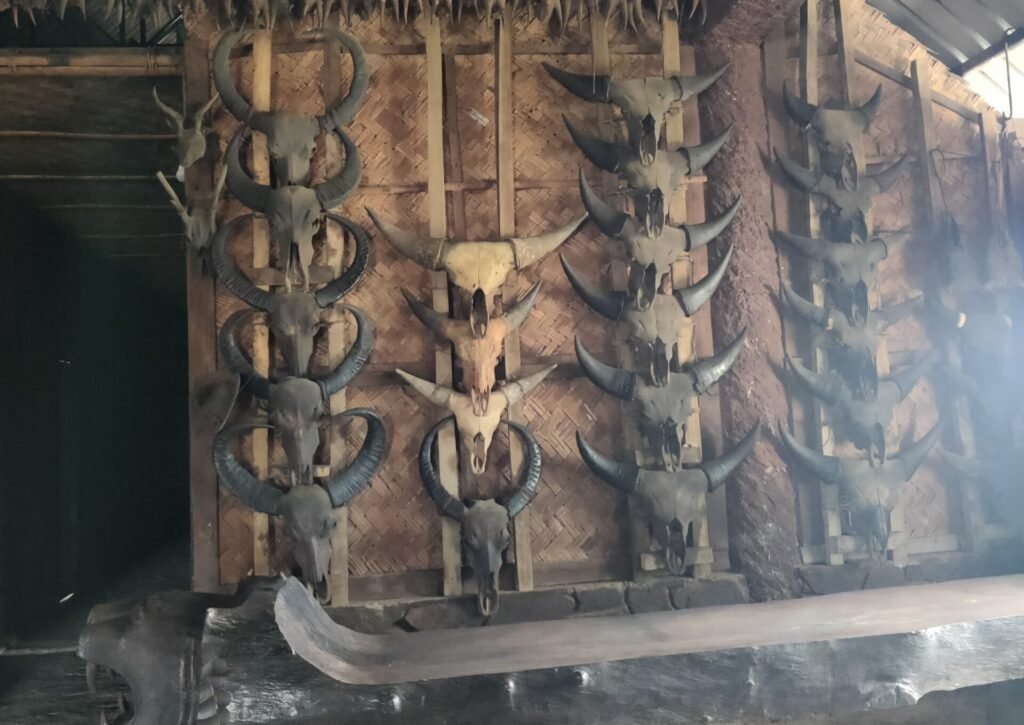
Once invited in, let the household set the pace. Follow its preferences about shoes, seating, photographs and which areas guests may enter. Ask before touching objects. If a contribution or fee is part of the arrangement, have it explained beforehand so the introduction can begin without an awkward negotiation.
Questions about farming, craftsmanship, village responsibilities or changes in daily life can start a richer conversation than a demand for dramatic stories. Allow time for interpretation and for an answer to take its own direction. A translated summary is useful for understanding, but it should not be published as an exact quotation without checking it with the speaker.
If the household cannot receive you, a guided walk and a confirmed maker’s visit still give the day substance. Build the itinerary around a welcome, rather than around gaining entry to a particular room.
Crafts and village life beyond the border photograph
Woodcarving is a strong reason to look more closely at Longwa. The district identifies the village with this craft, while community-based Konyak heritage documentation also covers beadwork, brass, bamboo and cane. These wider traditions can help you decide what to ask about, without assuming every type of work will be demonstrated in one village.
If meeting a maker is a priority, arrange it before arrival. Ask about the material, the tools and the time needed to finish the piece. A discussion of how an object is used—or how a design has changed for contemporary buyers—can be just as interesting as watching the work itself.
Agree a demonstration fee where appropriate. Craft production is someone’s livelihood, and a small purchase does not automatically pay for a long group workshop. Keep photographs of the maker and process separate from permission to browse the work.
For something to take home, choose a contemporary piece made for sale, with a clear account of its material and maker. Get a receipt and consider how you will pack it. Avoid wildlife parts, weapons, ammunition or objects with uncertain ownership; a market purchase does not settle transport or export rules.
A village walk offers another kind of detail. Ask how homes, public spaces and surrounding farmland relate to one another, following the route your host suggests. For photographs of the ridge, use an agreed stopping point rather than stepping into a garden, climbing a structure or wandering towards an unapproved border location.
Photographing people without turning them into attractions
A portrait begins with a conversation. Explain whether you want a private photograph, a social-media post or material for publication, and ask the person directly, with interpretation if needed. Someone who is happy to talk may still prefer not to be photographed.
Let people choose how they appear. Tattoos and family possessions can have personal meanings; neither should become a request for an elder to perform a familiar travel-image pose. Avoid unsubstantiated labels such as “the last” and do not press for stories someone would rather keep private.
If a portrait session is offered, agree the payment and intended use in advance with the person or their representative. Consent to one image does not cover a commercial campaign or a different audience. For children, seek appropriate guardian consent and avoid sharing identifying details.
Giving sweets or money for casual photographs can create uncomfortable expectations. If you would like to contribute beyond paying hosts and makers fairly, ask a trusted community contact about an accountable local initiative.
Getting to Longwa through Mon
Plan three connected legs: your regional arrival, the transfer to Mon and the village journey. The district transport information describes approaches through Assam, including Sonari and Naginimora. Jorhat, Dibrugarh and Dimapur are flight gateways to compare; Bhojo and Simaluguri appear in the district’s rail-and-road guidance.
Compare the whole journey before choosing the cheapest ticket. Arrival time, the onward road and a sensible overnight stop may matter more than a small difference in airfare. A local driver can help select the approach for your dates; old published bus and helicopter timetables are not dependable booking information.
For the Mon–Longwa leg, agree pickup, waiting and the return before departure. Tell the driver about a planned meal or craft appointment, and include any overnight expenses in the quote. Shared transport needs an independently confirmed return arrangement; it should not be expected to wait through a visit.
Allow time in Mon after a long arrival journey. Trying to reach the village, make introductions and return all in the remaining daylight can leave little of the experience you travelled for.
A realistic visit plan
First stage: settle in the Mon area
Arrive and rest, then meet your guide to discuss the following day. Confirm documents, access, the village contact and meal arrangements. This is also the moment to choose what matters most: a household visit, woodcarving or a slower walk, rather than several appointments squeezed together.
Second stage: a dedicated Longwa day
Begin with a local orientation. If the Angh’s household is receiving guests, follow the agreed visiting arrangements; combine this with a walk and one confirmed craft interest. Have lunch organised in advance and keep a clear return time. A missed meeting need not turn into hours of waiting or a drive after dark.
Optional village overnight
A confirmed overnight can ease the pressure of the return drive and leave more time for conversation with your host. Arrange the room, meals and next morning’s transport before choosing this option. Staying longer is worthwhile when the household has agreed to it and you want the slower pace, not simply because a return vehicle was never organised.
Stays, meals and the complete cost
Mon makes a convenient base if you are also visiting other places in the district. A village homestay may save backtracking and offer a quieter evening. Compare a specific property with a specific host, rather than assuming every stay in either location has the same facilities.
Ask about the room, bathroom, hot water, charging and meal times. For limited mobility, request photographs of the approach from the vehicle and the steps between sleeping, dining and bathroom spaces. A shorter guided visit with time seated may be easier to adapt than a long village walk.
Price the whole day or stay: room, meals, guide, vehicle, waiting, driver expenses and any agreed household or activity contributions. Check whether charges are per room, person or group, and keep some money aside for a changed transfer or extra night. Get cancellation terms that explain what happens if access changes.
Meals are an opportunity to ask what the household cooks and which ingredients are local. Khalap, black tea, appears in the district’s account of Konyak hospitality; if offered, it can make a simple setting for conversation. Avoid arriving with an expectation of a fixed ceremonial menu.
Explain allergies and dietary requirements before the host buys or prepares food, including meat stock or fermented ingredients where relevant. Carry backup food for essential needs and enough drinking water for the agreed journey. No village-wide rate, inspected property or guaranteed room is claimed here: obtain the quote from the actual provider.
When to go and what to carry
Choose dates around road conditions, permitted access and the availability of hosts. If a festival is the main draw, ask about the actual Longwa programme and which parts welcome visitors. A recurring state calendar does not promise a public performance in the village.
Pack comfortable shoes with grip, rain protection, a warm layer for cooler stops and a torch. Keep medication, necessary documents and contact details with you, with offline copies available. Agree usable payment methods before leaving Mon.
For a group with children or older travellers, keep the walking plan short enough to adapt and build in food, toilet and rest stops. Ask where you would seek medical help if needed and who can arrange the onward vehicle. Straightforward preparation lets you spend more of the day listening and looking, rather than solving avoidable problems.
Frequently asked questions
Can tourists cross into Myanmar at Longwa?
Do not plan an informal crossing. Establish what is permitted for your nationality and route with the responsible authorities, and remain within that area.
Can I meet tattooed elders?
Only through an appropriate introduction and if the individuals wish to receive you. No person is a guaranteed attraction, and a welcome does not automatically include photography.
Is Longwa worth an overnight?
It can suit a slower visit with a confirmed host. A well-planned day from Mon is equally valid if it gives enough time for the people and interests you have arranged.
What makes a good local guide?
Respectful introductions, clear explanations, realistic timing and transparent charges. Choose someone who can discuss current access and adapt the day when a household or authority needs plans to change.
Sources and planning links
Background: Longwa and the Angh’s house, Longwa woodcarving, Konyak crafts, Konyak cultural background, regional approaches, 10 October 2026 PAP statement. Research checked 28 October 2026. Historical transport listings and cultural accounts are not current access or booking confirmations.