
A good Longleng visit might begin with a crop rather than a monument. At Pongo, locally prized taro connects farming, food and new business ideas. At Yaongyimchen, community conservation offers a different conversation about land and its future. Add Phom weaving or bamboo work, and you have the makings of a thoughtful few days in northern Nagaland.
Give the district two nights for one substantial village outing, or three to include both Pongo and a conservation visit. Longleng town is the straightforward base. This is a place for travellers who enjoy learning from hosts and makers, with time for a walk and a meal rather than a rapid circuit of viewpoints.
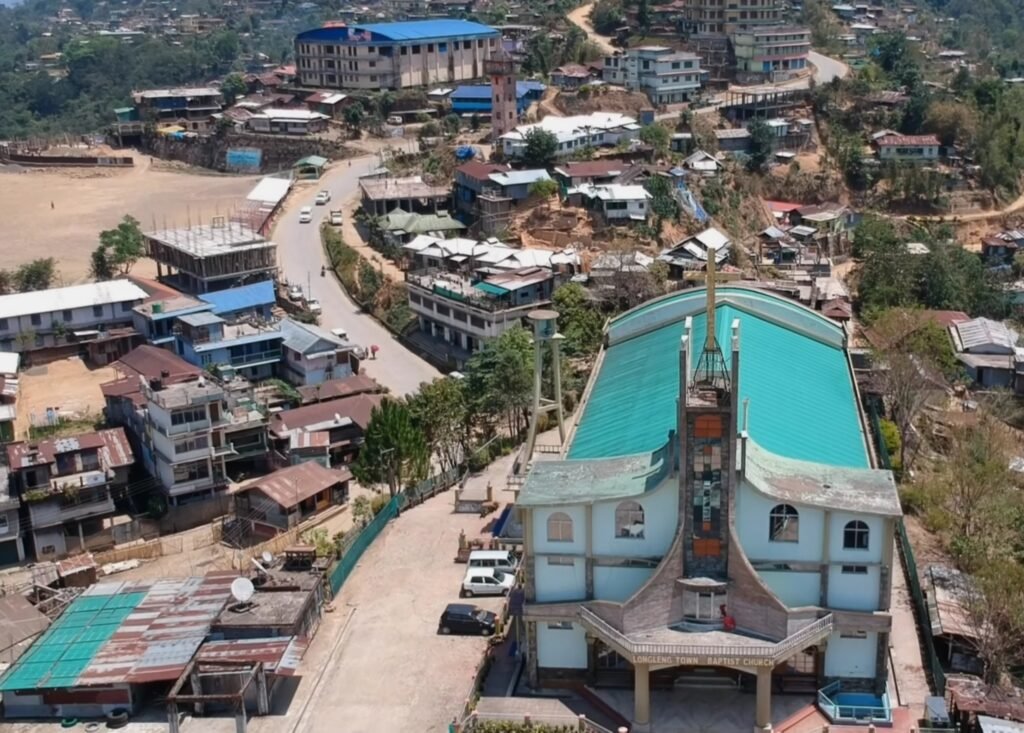
Photo: Truthfullyserve1202 (2023) · Source · CC BY 4.0. Resized; not cropped.

Understanding Longleng
Longleng became a revenue district on 24 January 2004, after separation from Tuensang. It is closely associated with the Phom community. The district lies between Mon to the east and Mokokchung to the west, with Assam to the north and Tuensang to the south. Longleng town is its headquarters; Tamlu is another important town.
Use the name of the village when booking a visit. A room in Longleng town, a Pongo outing and a meeting with conservation hosts at Yaongyimchen each involve different locations and arrangements. This becomes especially useful when planning an onward journey to Mokokchung or an approach through Assam.
Start with what interests you: food growing, a particular craft or conservation. A local host can then help you choose the places and people who are ready to receive visitors. Several lakes and caves appear in official inventories, but the strongest reason to come may be a well-arranged conversation about the landscape rather than an adventurous excursion through it.
Places and experiences
Longleng town
After the road journey, keep the rest of the arrival day in town. Settle into your room, have something to eat and take a short walk if you feel like it. Use the evening to meet your local contact and agree the next day’s pickup and meal arrangements.
Longleng’s hill setting is part of its appeal, and town gives you a useful place to return between rural outings. If craft shopping interests you, ask about locally made shawls and bamboo work. Finding out where an item was made is more helpful than assuming everything on a stall comes from the district.
Pongo village and taro heritage
Pongo gives food-minded travellers a clear reason to spend time in Longleng. Its taro, known as Pongo Doong, was the focus of the village’s first Taro Festival on 5 and 6 December 2025. The event brought farming and market opportunities into the same conversation as food and culture. Pongo is about eight kilometres from the district headquarters, according to the official festival report.
Outside an event, arrange an introduction to a farmer or cook. Ask how taro is grown, which preparations the household enjoys and how the crop reaches buyers. A cooked tasting or lunch can make that conversation tangible, provided it is agreed in advance. Pay for the ingredients and the host’s time rather than expecting a demonstration as part of a casual walk.
Shamnyu Lake is also listed at Pongo. Let your host advise whether its approach and current access make it a worthwhile addition that day. A visit here need not involve boating, swimming or a lakeside restaurant; none is established by the official listing. If the lake does not fit, leave more time for the village.
Pongo is particularly well suited to a day with one main subject. The relationship between a crop, the people growing it and the food on the table offers plenty to explore. Ask permission before entering fields and let the farmer choose what can be shown without interrupting work.
Yaongyimchen and community conservation
At Yaongyimchen, the landscape is closely connected with community decisions about conservation. Lemsachenlok’s work, involving Yaongyimchen, Alayong and Sanglu, includes protection and restoration of forest land. Amur falcons also feature in documentation of the area. For visitors, the interest lies in understanding this local stewardship as well as enjoying the natural setting.
Arrange the day with community or conservation representatives. Depending on the season and what they can host, it might centre on a discussion, an approved nature walk or bird observation. Explain your interests and agree who will accompany you, the contribution, walking demands and group size.
For birdwatching, recent local information matters more than a calendar copied from Pangti in Wokha. Ask whether birds are present and which viewing place is appropriate. Follow the agreed route and use binoculars from a respectful distance. Keep drones, playback and bright lights away from birds, and leave sensitive roost locations out of public posts.
The Mongti-Amlung meeting arena, inaugurated in July 2025, provides another subject for a host-led village walk. The official account emphasises its significance in community decision-making. If it is included in your visit, let the hosts explain how the space is used and how visitors should behave there.
A conservation day remains worthwhile when wildlife is quiet. Ask about the work involved in protecting land, the choices made by residents and what visiting groups can contribute. That gives the outing a purpose beyond securing a particular photograph.
Bhumnyu and cave heritage
Bhumnyu is one of the district’s named village destinations. The state’s attraction profile associates Ahom Raja caves with Bhumnyu and Bura Namsang. A locally interpreted visit can introduce the stories attached to these places, without treating those stories as a precisely dated archaeological record.
Begin with a village introduction and find out what can comfortably be seen from the surface. Cave entry is a separate undertaking requiring a suitable guide, equipment, permission and a recent assessment of the approach and weather. An online map pin does not provide that preparation.
For most general visitors, the history and landscape may be enough. Leave formations, inscriptions and loose objects untouched. If entering is unsuitable, a hosted walk or craft visit gives the day a useful alternative without searching for another way into the cave.
Tangha Lake and other landscape visits
Tangha Lake is another name in the official attraction profile, best considered for a longer stay. Ask a local organiser to identify the exact site and explain the route, permission and facilities. Include it when those details suit your group, rather than making it an essential stop on a two-night trip.
River landscapes, including the Dikhu, offer further possibilities for a locally chosen outing. Select a permitted viewing or resting place with your host. Angling, swimming and picnicking need their own permission and safety judgment; a calm-looking stretch of water is not a supervised recreation area. Keep away from unstable banks, particularly after rain.
Phom culture, food and craft
Phom shawls and bamboo work are rewarding places to begin if you enjoy craft. Ask a maker about a pattern, the materials and the time involved. With a basket or container, its practical use can be just as interesting as its appearance: a well-made everyday object has its own story.
An arranged demonstration gives you more opportunity to learn than arriving while someone is busy. Agree the time and payment beforehand, and ask what can be photographed or recorded. Buying a piece does not transfer the right to reproduce its design commercially. Choose items intended for sale and keep the maker’s name with the object when you take it home.
Pongo Doong offers a particularly local food interest. Ask for a cooked preparation that your host is able to make, then enjoy it as that household’s cooking. There is no need to search for a supposedly standard Phom platter. Explain allergies, vegetarian requirements and chilli tolerance before the meal is planned, including ingredients such as meat stock if those matter to your diet.
Village visits take place around work, church, school and family life. Keep appointments and enter homes only by invitation. Ask the person before making a portrait, especially when children are involved. Contemporary clothes, tools and routines are part of Longleng too; a visit should leave residents free to share their lives on their own terms.
When to visit
For a first trip involving several road and village days, the cooler months after the monsoon through early spring are a useful choice. Bring layers and rain protection, and let the host’s current advice guide any forest outing. If birds are the main reason for your journey, decide the dates from recent conservation information rather than an old photograph.
Monyu, the Phom festival, is associated with early April. Choose a village or public programme, then confirm the dates and welcome for visitors. A busy festival can be an enjoyable focus for the stay, but the household hosting you may also have its own commitments.
The documented Pongo Taro Festival was held in December 2025. A future edition needs a fresh organiser announcement; that first event alone does not establish an annual schedule. You can still pursue Pongo’s food and farming interests through an arranged visit outside festival time, often with more space for questions.
Getting there and entry checks
Longleng’s official transport guidance identifies Jorhat and Dibrugarh airports in Assam, as well as Dimapur, with onward road travel. Amguri and Mariani are rail approaches to compare. The most suitable gateway depends on where the district sits in your wider holiday, not simply on which airport is within Nagaland.
If you are already visiting Mokokchung, consider moving on to Longleng for a separate stay rather than trying to make a long return excursion. Share your intended village visits with the driver so the route follows their actual locations. A stop that looks close on a map may be a substantial detour from the usable road.
For shared services, confirm the operating day, departure counter, seat and luggage arrangements directly. Published times are useful leads, not a booking. With a hired vehicle, agree the gateway transfer, village-day use, waiting and driver expenses together. Aim for a daylight arrival and leave a buffer before the onward flight or train.
Check your entry category through the official ILP portal and Nagaland Tourism permit links. Foreign visitors should establish PAP and registration requirements with the competent authorities. Entry documents and permission from the village or landholder serve different purposes; arrange both where relevant.
Accommodation and hosting
Secure your Longleng town room before building the village days around it. Omega Lodge and Restaurant near SBI appears in the district accommodation directory. It is a place to enquire about, rather than an inspected recommendation; obtain a current room quote and meal confirmation instead of relying on the tariffs in the older listing.
A village overnight can work when a willing host has agreed the room and your reason for staying. Ask about the bathroom, bedding, hot water, charging and the approach from the vehicle. For a step-free requirement or an attached bathroom, recent photographs give a clearer answer than a general description of comfort.
Give your host an arrival window and agree how to make contact if delayed. Settle dinner time, pickup instructions and cancellation terms before paying. These small arrangements matter especially when meals and reception are being provided by a small team or a household.
Suggested itineraries
Choose the shape of the stay around confirmed hosts. Airport or railway transfers may require additional time beyond the nights below.
Two nights for a first introduction
Use day one for arrival and a little town time. Give the full second day to Pongo, with a food or farming introduction, lunch and a village walk. Shamnyu Lake is an optional addition if your host recommends the access. Depart on day three with enough time for the road journey. This makes a coherent short visit without trying to combine Pongo, Bhumnyu and Yaongyimchen in one day.
Three nights with community conservation
After arrival, allow one full day for a community-approved Yaongyimchen visit and another for Pongo, food or craft. Let the conservation hosts advise on the order, especially if bird observation is the priority. The third night avoids having to finish a rural outing and immediately start a long onward transfer.
A longer heritage or festival stay
With four nights, build the stay around a confirmed Monyu celebration or a heritage host. Add a separate Pongo or craft day and keep one flexible day for Bhumnyu or another locally arranged outing. Tangha Lake or cave entry should remain optional until access is clear. A free town afternoon is a useful alternative when a host’s plans change.
Costs, accessibility and preparation
Ask for a budget that separates rooms, meals, gateway transfers, local vehicle days, guiding and hosted activities. Agree a fair contribution for a farmer, maker or conservation representative giving substantial time. Establish what is refundable or movable if weather changes the programme, and carry cash for agreed small payments.
For families, one main rural visit a day leaves time for curiosity and rest. Confirm a meal and toilet stop, and carry water and snacks. Ask before offering food to children or animals. With limited mobility, check the specific path, doorway and bathroom; a vehicle reaching the village does not establish access to every part of it.
Save your contacts and route offline, protect documents from rain and carry essential medicines. If someone may need medical support, ask the host about suitable help and return transport in advance. A practical pickup plan is more useful than depending on phone reception at every stop. Keep the final day’s schedule generous enough to protect an important train or flight.
Frequently asked questions
What makes Longleng worth a separate stay?
A few days let you connect Phom craft, Pongo’s taro-growing heritage and Yaongyimchen’s conservation work. Those subjects deserve more time than a passing roadside stop.
Is the Taro Festival confirmed every December?
No annual booking date is established here. The first documented edition took place on 5 and 6 December 2025. Wait for a new organiser announcement before planning around another edition.
Can I visit the conservation area without arranging it?
Arrange it with community or conservation representatives first. They can tell you what is appropriate for your dates and interests, including current birdwatching possibilities.
Are the caves and lakes ready for independent sightseeing?
Treat them as locally arranged options, not a ready-made independent circuit. The official listings do not establish equipped caves, public trails or current visitor facilities.
Sources and planning links
Background and updates: district history, tourism and crafts, transport and accommodation; DIPR’s Pongo festival report, attraction profile and Mongti-Amlung report; Green Files conservation account, community-conservation documentation and festival calendar. Research checked 28 October 2026; historical reports do not establish current services or event dates.