
Shilloi Lake is the image that draws many travellers to Meluri: quiet water enclosed by hills and pine trees, with stories that belong to the people who live around it. Give the journey more than a single lakeside stop, though. Time in Meluri town, a meal with a Pochury host and a village visit can make the landscape much more meaningful.
This is a trip for travellers happy to plan the roads carefully and spend their time well once they arrive. A short visit can focus on Meluri town and a hosted cultural introduction. For the lake, allow a separate transfer and, ideally, a full day without a long drive. The most satisfying itinerary leaves room to sit by the water as well as reach it.
Meluri district and Meluri town
Meluri became a district on 2 November 2024. Older guides place it within Phek because that was the previous administrative arrangement; current travel planning should use its separate identity. Later inauguration ceremonies and office openings are different milestones from the date the district was formed.
Meluri town is the headquarters and a useful staging point for the wider area. Shilloi Lake is elsewhere in the district. That distinction is especially important when booking accommodation: Shilloi Lodging is listed in Meluri town, while Shilloi Resort is listed at Letsam, the lake locality.
Think of a town stay and a lake stay as two parts of the journey. Meluri gives you a place to meet a host, organise supplies and understand the region. Shilloi rewards the extra travel with a slower day outdoors. Neither needs to be hurried into the spare hours after arriving at the other.
Pochury life and a changing district
The district is closely associated with the Pochury community and language. Its official profile explains the Pochury name through Sapo, Küchuri and Khwiry and records formal recognition of the community in 1990. These are useful beginnings for understanding local identity; a host can help you understand what those connections mean in their own village.
Let that conversation include the present. Farming, education, work and the new district’s services are part of life here alongside stories, textiles and festivals. Meluri’s administrative history reaches back through local offices established from the late 1950s, so recent district status sits within a much longer story of change.
A festival performance, a household lunch and an ordinary walk through town reveal different things. You do not need a performance at every visit. Ask how people describe their community and what they would like a guest to understand, without expecting traditional clothes or a rehearsed welcome on a working day.
Time in town and the villages
Use your first afternoon in Meluri to settle in and meet the people helping with the journey. A short walk through public streets, a meal and a conversation about the following day can be enough after a long drive. Ask where local produce or craft is available if those are your interests.
For a village visit, begin with a specific invitation or willing contact. A conversation about seasonal farming, lunch with a household or time with a maker gives the visit a clear purpose. Agree the village, meeting place, duration and payment before setting out so your host knows what you hope to do.
Follow the host’s lead around homes, churches, fields and community buildings. A good view from the road does not make the adjoining path public. Ask before photographing people or recording an account, and explain if you intend to publish it. Taking time to listen and respecting an answer you cannot record can leave you with a richer memory than collecting another image.
Shilloi Lake
Shilloi, also written Shiloi, lies at Lütsam, also encountered as Letsam, in the Phokhungri area. It is a natural valley lake surrounded by pine landscape, known for an outline resembling a footprint. The setting is the main attraction: water, wooded slopes and the changing light across the hills.
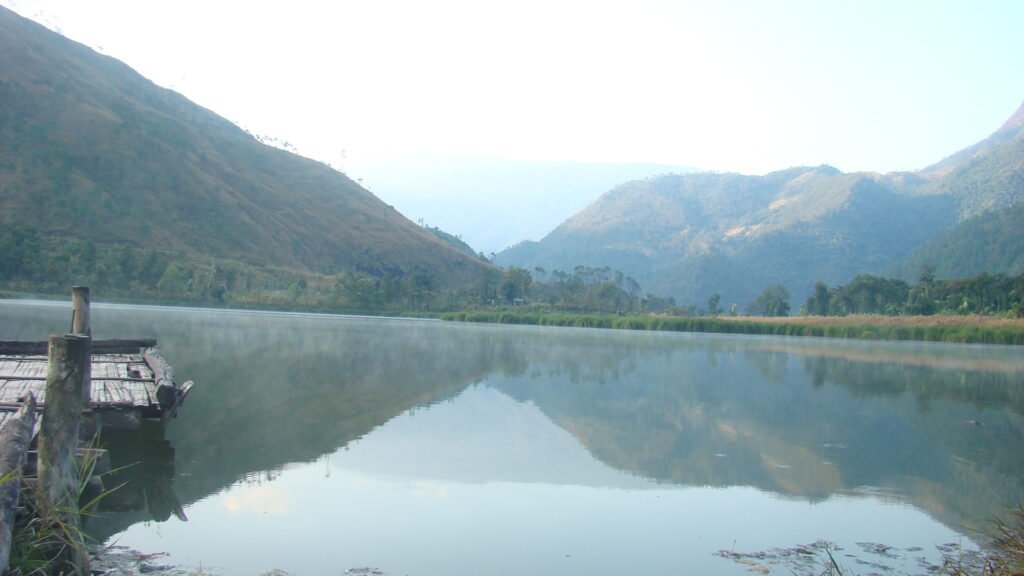
Photo: Murari521 (2007) · Source · CC BY-SA 4.0. Resized; not cropped.

Choose a comfortable, permitted place to spend time by the shore rather than beginning with a list of activities. A short walk, a quiet meal and an introduction to the lake’s stories can fill the day well. Ask your host which paths are suitable and where local people welcome visitors and photographs.
The footprint shape is easier to understand in an overall view than from every point at the water’s edge. Use an approved viewpoint instead of climbing an unfamiliar slope to reproduce a photograph. Drones are a separate matter, subject to legal and local permissions; a scenic setting in a border-area district is not an invitation to fly.
If you hope to row, fish or take part in another activity, arrange it explicitly before arriving. Equipment, staff and permission should all be part of that agreement. With nothing organised on the water, a lake stay can still be worthwhile for travellers who enjoy a quiet landscape and time away from a tightly scheduled route.
Stories around the water
One recorded tradition tells of a child floating in the lake, supported by hands, and a protective presence associated with the water. Ask someone connected with the place how the story is told locally. Different tellings and the meaning people give them are part of the cultural interest.
Listen to the tradition on its own terms. A belief that the lake protects people from drowning is not a physical safety assurance. Keep children close at the shore and do not enter the water on the strength of a story, a photograph or the absence of a warning sign.
The same respect extends to the landscape itself. Leave plants and natural objects where they are, keep a distance from birds and bring back your litter. Where a host identifies a restricted place or practice, follow that guidance. A room booking gives you a place to stay, not unrestricted access to every part of the lake and its community.
The Tizu River and the Avakhung area
The Tizu adds a river landscape to Meluri’s story. At the seventh Hornbill Angling Festival in December 2025, held along the river at Tekümle, conservation of mahseer was a central theme. The event connected angling with the health of the river and the need to protect fish and their habitat.
For anglers, that history is a starting point for a current enquiry. Ask the relevant community or organiser where fishing is permitted, which rules apply and whether an event is being held. Do not assume a public fishing season, equipment hire or permission to keep fish. Likewise, discussion of a waterway or tourism development does not establish a running passenger boat service.
Avakhung, a border-area village, appears in older sources as Avangkhu or Avankhung. A June 2025 district meeting recorded a proposed correction to Avakhung. Give the spelling variants when making an enquiry so everyone is discussing the same destination.
A visit there requires separate, current advice from the district administration about access and permissions. It should not be added casually to a Shilloi transfer. A border road or trade facility does not authorise entry into Myanmar, and this guide does not propose a cross-border route. A first Meluri trip can be fully rewarding with the town, a village introduction and the lake.
Yemshe and when to come
Yemshe welcomes the new harvest and is the principal Pochury festival. The district calendar associates it with 5 October, describing feasting and shared work such as village cleaning. A public programme can take place on a different day: the reported 2026 community celebration at Lephori was held on 3 October, with folk dances and traditional games.
For a future festival visit, use the organiser’s actual programme to choose your arrival date. Ask which sessions welcome guests and allow time to get settled beforehand. The cultural calendar tells you the season; it does not replace the arrangements for a particular year or village.
Festival time can be a rewarding introduction, but households will have their own responsibilities. Book a hosted meal or a craft appointment separately rather than expecting it to fit around the celebration automatically. The district also records other celebrations, so ask your host about the wider farming and community calendar rather than treating Pochury life as a single annual event.
For a general town-and-lake journey, choose dates that work for current road access and your accommodation provider. Cooler, drier periods are a useful starting point. Bring layers and rain protection, and in wet weather leave room for slower travel. Reaching your room in daylight is more important than preserving an ambitious list of stops.
Food and local purchases
Let a meal introduce the crops and preferences of your host’s household. Ask what is seasonal and what they would normally cook. Millet is a useful subject for conversation: a June 2025 district meeting proposed it as Meluri’s district product focus, though that proposal alone does not establish a completed designation.
There is no need to arrive with a list of supposedly essential Naga dishes and expect every one to be a Pochury speciality. A simple meal, with its ingredients explained by the cook, can teach you more. If a local grain or vegetable interests you, ask whether it can be included when you arrange the meal.
Plan lunch for the lake transfer before leaving. Give clear information about vegetarian needs, allergies and avoided ingredients, including stock or dried fish where relevant. Carry drinking water and a small backup snack. For packaged produce to take home, check the ingredients, date and storage requirements.
With textiles and other craft, seek a willing seller who can explain the maker, materials and use. Ask whether a design or garment has a ceremonial role before treating it as something to wear for a photograph. Buying a well-understood piece from its maker is a better souvenir than persuading someone to part with a family heirloom.
Getting there and arranging the route
Most visitors will approach by road from the Dimapur arrival area or Kohima. Treat Meluri as a road-based extension of your wider Nagaland journey, with the route and departure checked through the transport provider. A general transport listing should not be used as a live timetable.
Discuss the complete journey before booking individual nights: arrival point, Meluri town, the lake locality and the return or onward destination. A transfer quoted to Meluri town may not include Shilloi. If Weziho is suggested as an overnight stage, establish the actual room and how it helps the following day’s route.
For a hired vehicle, agree the space for passengers and luggage, fuel, waiting at the lake, driver accommodation and the cost of an extra day. Be clear whether the driver stays with you or leaves after the drop-off. That distinction is essential when a quiet lake stay ends with a departure you cannot arrange at the last minute.
Shared transport may suit part of the journey, but work out each connection. A bus or taxi to Meluri does not automatically provide the final lake transfer. Establish the departure point, operating day, luggage arrangements and onward vehicle before relying on it.
Keep a buffer between Shilloi and an inflexible flight or train. If the road is slow, shorten the sightseeing rather than using the margin reserved for the connection. An unplanned border detour should never decide whether you reach a confirmed bed before dark.
Where to stay
The district’s accommodation directory gives four useful starting points. Their locations matter as much as their names:
- GA Rest House: Meluri town, for a headquarters-area stay; government booking approval or eligibility may apply.
- Shilloi Lodging: Meluri town, despite the lake name.
- Guest House: Weziho town, an enquiry lead if that location fits your road plan.
- Shilloi Resort: Letsam, the locality to discuss for a lake-focused stay.
These are official directory leads, not inspected recommendations or live room offers. Contact the provider about operation, availability, meals and booking terms. The word “resort” does not by itself promise a restaurant, luxury room or water activities.
For Shilloi, ask where the room is in relation to the water, what the approach is like and how luggage reaches it. Recent room and bathroom photographs can settle questions about steps, bedding and facilities. With a family, those basics and a meal plan will make a bigger difference than a scenic description.
Keep the booking, host’s contact and arrival directions offline. Agree what happens if the road prevents arrival and how to notify the host of a delay. A clear arrangement makes a remote stay easier for both guest and household.
Three ways to plan the visit
These suggestions allocate time after the main approach has been arranged. They are not fixed driving schedules; a driver’s current road advice should determine the overnight sequence.
Two nights for a cultural introduction
Arrive in Meluri, settle into a confirmed room and meet your local contact. Spend the full middle day on an agreed village conversation, meal or maker visit, with a short town walk if time allows. Depart the next day. This is a worthwhile short trip on its own when adding the lake would make every day a transfer.
Four nights for town and lake
Spend the first night in Meluri. Use the next day for the lake transfer and stay two nights at a confirmed lake-area property, leaving one full day to enjoy the setting without a long drive. Return to a staging base for the fourth night before the final onward journey. Add another road night if local advice calls for it.
Yemshe with a lake extension
Build the first part of the trip around the confirmed public programme and arrive before the session you want to attend. After the celebration, leave time to rest and reconfirm the lake road and room. Add Shilloi as a separate extension with its own transfer and full day, rather than attempting a festival and a remote lake journey together.
Budget, access and family travel
Price the main transfer, lake transfer, rooms and meals separately, then add any agreed host or guide fee. Carry a reserve for a delayed road journey and establish cancellation terms before paying. A short town stay and a multi-night lake circuit have very different transport costs, so a single daily budget would be misleading.
Check the official ILP portal and responsible immigration authorities for the documents that apply to your visitor category. Foreign travellers should verify Protected Area Permit and registration requirements. Any border-area plan needs separate authoritative advice; permission to enter a state is not permission to cross an international boundary.
For reduced mobility, discuss the route from the vehicle to the room, the bathroom and the shore. Road access to a property does not establish step-free access to the water. Families should choose a manageable lakeside area and keep children actively supervised, with no reliance on local stories as a safety guarantee.
Carry regular medicines, a power bank and offline contacts, and discuss access to medical help before choosing a remote overnight base. A slower route with well-arranged meals and a confirmed room gives you more freedom to enjoy Meluri than a schedule that depends on every connection working perfectly.
A few common questions
Is Shilloi Lake still in Phek district?
Current Meluri district material places it in Meluri. Older Phek sources can still explain the lake’s landscape and stories, but their administrative label predates the new district.
Is Shilloi Lodging beside the lake?
The official directory places Shilloi Lodging in Meluri town and Shilloi Resort at Letsam. Confirm the provider and locality before paying.
Can I expect boating, fishing or swimming?
No. Ask the responsible local provider about permission and current arrangements for any activity. Enjoying the shore and landscape does not depend on entering the water.
Can I cross into Myanmar from Avakhung?
This guide does not propose a cross-border itinerary. Obtain authoritative access and permission advice, and never treat the presence of a road or trade centre as visitor authorisation.
Sources and useful references
Research checked on 28 October 2026 using Meluri district’s community profile, history, festival calendar and accommodation directory; the Nagaland Pollution Control Board wetlands account; and government reports on Tizu conservation, Yemshe in 2026 and the June 2025 district meeting. Older lake accounts are read with current district boundaries in mind.