
An apple-growing village beneath Saramati, forested ridges at Fakim and the cave landscape around Mimi give Kiphire several very different kinds of appeal. Before planning the road journey, decide which one matters most to you. A holiday built around Thanamir and local food can be rewarding without a summit, while Saramati deserves the preparation and time of a mountain expedition.
For a first visit, choose one main part of the district and leave room to enjoy it. Three nights can introduce village life and farming; a forest-focused stay or a major trek needs its own timetable. Kiphire’s scale is part of the attraction, but it also means that a list of places is not yet a workable itinerary.
Understand the district and its bases
Kiphire lies in eastern Nagaland beside Myanmar, in mountain country that includes Saramati and the Jingkhu mountains. The headquarters is Kiphire town. An administrative centre was established here in 1952, and the separate district was inaugurated in January 2004 after separation from Tuensang.
Keep three locations distinct when booking: Kiphire town for an initial stay and arrangements, Pungro as another important transport and administrative reference, and the individual village where your visit begins. Thanamir, Fakim and Mimi are not neighbourhoods of the headquarters. A quote to Kiphire town may leave a substantial final transfer still to arrange.
Recent changes to eastern Nagaland’s district map can make older travel descriptions confusing. Saramati and Fakim belong in a Kiphire itinerary, not a Shamator one. Use the current village and district name with your host and driver, and work out each night’s location before choosing rooms.
Mount Saramati and the decision to trek
Saramati rises near Thanamir on the India–Myanmar boundary. Forest, long ridgelines and the mountain’s scale are reasons to come, as well as the prospect of a summit. Give the walk its own place in the holiday instead of treating the mountain as a viewpoint to visit between road stops.
Start with a competent organiser who knows the currently permitted route. Discuss the walking days, ascent and descent, group size, sleeping arrangements and likely weather. Explain your recent walking experience honestly. A general description of a trek as suitable for amateurs cannot tell you whether its longest day will suit your group.
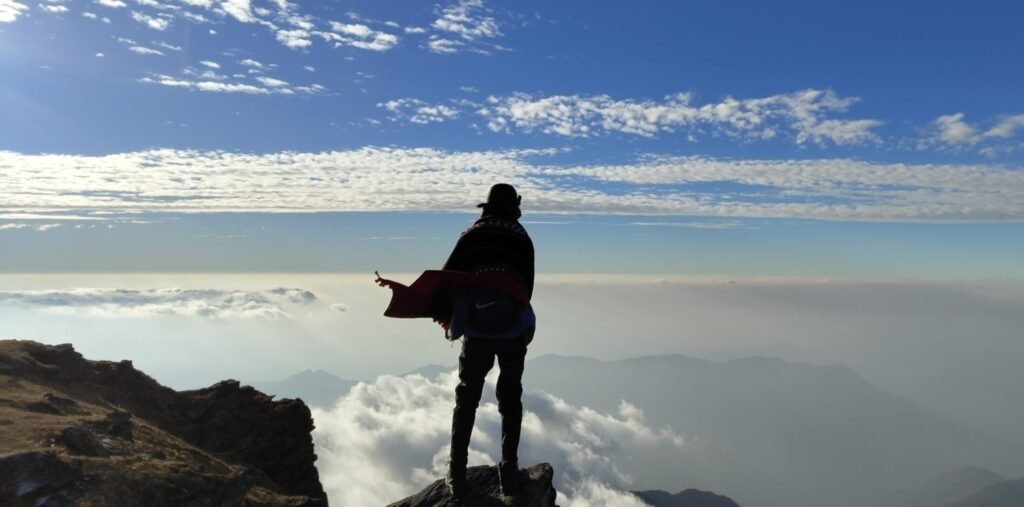
A good briefing should make responsibilities clear: who provides equipment, carries food, arranges drinking water and leads the route, and how the group communicates if someone needs help. Ask what happens when a walker turns back and where the practical exit options lie. The return transfer should leave room for weather rather than depend on reaching the summit on a single fixed day.
As this is a border mountain, follow the authorised route throughout. A ridge or marker does not give permission to enter Myanmar. If the mountain’s demands do not suit your holiday, choose Thanamir and another arranged village experience instead. You can enjoy the district’s highland setting without making a summit attempt.
Thanamir and the apple-growing landscape
Thanamir is known for apples and as an approach village for Saramati. Those interests can be enjoyed separately. Travellers drawn to farming may prefer time with a grower and a village stay to several days of mountain walking.
Arrange an orchard introduction around the grower’s work. Ask about the year’s cycle, the harvest and how fruit reaches buyers. If fruit is available, buying from an identified producer gives the visit a useful connection with the local economy. Enter orchards and pick only with permission; the attractive rows of trees are also someone’s livelihood.
The Apple Festival has brought these agricultural interests into a public celebration. Official listings include a 2022 edition, while DIPR records the fifteenth festival on 10 September 2024. They establish the event’s history, not the date of a future edition. Ask the village or organiser for the programme relevant to your journey.
Book your room and meals before setting out. Tell the host whether you are visiting Thanamir itself or continuing on a trek, because luggage, food and departure arrangements will differ. A reputation as a trekking base does not guarantee that equipment hire or a spare room will be available when you arrive.
Fakim Wildlife Sanctuary and forest visits
Fakim Wildlife Sanctuary is in the Pungro area, close to the international border. Its hills, ridges, narrow valleys and varied vegetation make the forest landscape the main subject of a visit. Choose it if you enjoy walking slowly, looking closely and allowing wildlife to appear on its own terms.
Arrange the visit through the responsible forest authority, with help from a reliable local organiser. Establish the permitted route, accompanying guide, entry time and any rules for photography or filming. Being welcomed in a village and being authorised to enter the sanctuary are separate matters.
Ask how long you will be away from the vehicle and what the path is like. A modest distance can still involve steep or uneven ground. Binoculars, quiet movement and patient observation will serve you better than a long list of expected species. Hornbills, tragopans and mammals should never be promised as part of a booking.
Keep a respectful distance, leave animals unfed and avoid recorded calls used to draw birds closer. If the forest route is too demanding for your group, an arranged village visit can be a better choice. Decide that before setting out so the day retains a clear purpose.
Mimi caves and a separate kind of adventure
Mimi’s cave complex offers a different outdoor interest from Saramati or Fakim. Bats form part of its living environment, and the caves deserve careful treatment as well as curiosity. For people with a serious caving interest, the first step is a conversation with an appropriately experienced organiser.
Specify the cave you intend to enter and ask about the assessed route, recent conditions, equipment, group competence and emergency plan. A village escort may know the landscape very well without having technical caving training. Do not improvise an entry with a phone torch or follow an unknown passage alone.
Leave bats and their roosts undisturbed, keep noise low and take no formations or other material away. An outdoor visit may suit a mixed-ability group better than entering the system. If conditions rule out entry, enjoying the permitted surface landscape is still a worthwhile outing.
The same care applies to other limestone caves mentioned in district publicity. They are not necessarily equipped attractions linked by marked trails. Choose one supported objective rather than adding a series of unassessed entrances to a road tour.
Communities, festivals and contemporary life
Kiphire is home to different communities, including Sangtam, Sümi and Yimkhiung people. Ask about the village and people hosting a particular visit rather than expecting one set of customs across the district. This variety is part of what makes a longer stay interesting.
Sangtam Mongmong, associated with September, connects harvest, household life and community relationships. The district’s account includes work on paths to water sources as well as feasting, songs and games. Sümi celebrations include Tuluni and Ahuna, with the latter associated with the first meal of new rice cooked in bamboo. These details offer a way to understand the relationship between seasonal work and celebration.
If attending an event, ask which parts of that account are relevant to the actual local programme and which welcome visitors. A description of customary practice is not a promise of a performance. The host’s explanation will give the occasion more meaning than trying to recognise every item from a calendar.
Make room for ordinary life too. Farmers, traders, students and people developing local businesses can offer perspectives that a ceremonial visit may miss. Introduce yourself, respect their time and obtain explicit consent before publishing a portrait or interview.
Food and crops to ask about
Kiphire’s fields give you plenty to ask about at mealtimes. Upland rice, maize, millet, Job’s tears and different beans feature in the district’s crop account. Kholar and soybeans are also grown, with terraced paddy in suitable terrain and apples in the colder Saramati foothills.
Ask the cook what was grown nearby and what is in season. A meal based on local beans or vegetables can be a satisfying introduction to the place without needing to stand for every community’s cooking. When buying fruit or dried produce, ask about origin and storage, and check transport restrictions before carrying agricultural products across an international border.
For a remote outing, agree food and water arrangements as part of the booking. Find out whether lunch is packed, who carries it and whether dinner is included in the room. Explain allergies and vegetarian needs before ingredients are purchased, including stock, dried fish or animal fat if you avoid them. Food at a cave or sanctuary entrance should not be assumed.
Choosing the season for your actual activity
Choose dates for the activity you most want to do. A village stay is more flexible than a high mountain journey. The district highlights October and November for Saramati and notes winter snow; those are useful seasonal clues, not a route-opening guarantee.
Ask the organiser separately about roads, forest paths and mountain conditions. A mild afternoon in town says little about a higher overnight stop. Match clothing and equipment to the planned altitude, and agree how the trip will change if the weather is unsuitable.
For apples, follow the grower’s harvest advice and any current festival announcement. During persistent rain, a shorter village or town plan can keep the holiday enjoyable while remote routes recover. Leaving a flexible day is easier than trying to protect several prepaid outdoor outings that all depend on good conditions.
Getting to Kiphire and arranging the last stretch
Dimapur is an established air and railway gateway, followed by a road journey to Kiphire or Pungro. Government and private bus and taxi options appear in the district’s transport information. Confirm the actual service, departure point and reservation arrangements for your dates.
The approach should fit the rest of your Nagaland route. A journey from Kohima or the Meluri side differs from one arriving through Tuensang. An experienced local driver can help choose the sensible corridor and overnight breaks; do not turn an older road-distance figure into a fixed travel time.
For a private vehicle, list each village and overnight stop in the quote. Include fuel, waiting, local transfers and the vehicle’s return after dropping trekkers. If the car collects you after a multi-day walk, agree how a changed finish day will be communicated where phone coverage is limited.
Treat published helicopter days as enquiries until the operator confirms them. Keep a realistic road fallback and leave enough time before an important onward train or flight. An unconfirmed air transfer should not be the only way your itinerary can work.
Accommodation leads and the right overnight location
The right overnight location depends on the day after it. A Kiphire-town room can suit arrival, rest and meeting the organiser. A confirmed Pungro or village-area stay may be more useful for a particular outdoor route. Choose on the basis of the real approach, not a map pin that appears close to the mountain.
The district directory lists GA Rest Houses at Kiphire and Pungro, Tsatongse Memorial Hall in Kiphire, and Fakim Recreation Centre and a DUDA guest house at Fakim. These are places to enquire about; they do not establish commercial room availability or eligibility for every visitor.
Ask who approves the booking, who will meet you and what facilities are provided. Settle bathroom arrangements, bedding, meals, vehicle access, price and cancellation terms in writing. A village house or camp included in a trek needs its own description, particularly for sleeping equipment and washing facilities; it will not necessarily resemble your town accommodation.
Three itinerary patterns
These plans begin after you reach the district area. Add the approach and departure journeys, with extra weather time where the route needs it.
Three nights without a summit attempt
Settle in on the first night and meet your organiser. Use the first full day for an agreed village or agricultural visit, with Thanamir a possibility when the transfer and host fit. Give the next day to another local interest or keep it flexible for a delayed visit. There is no need to force both Fakim and Mimi into this short stay. It suits travellers who want food, farming and village life without technical activities.
Four or more nights for a focused forest visit
Arrange the permitted Fakim outing first, then choose rooms around its approach. Allow an orientation and transfer day, the forest day and a separate flexible day. Add a village introduction if a host is available. The number of nights should follow the road and access plan rather than an assumption that every outing can start from Kiphire town after breakfast.
A Saramati expedition with its own timetable
Let the mountain organiser set the walking schedule for the group and conditions. Include the Thanamir approach, preparation, trekking days, a weather reserve and the return transfer. Keep Mimi and Fakim as separate extensions after the walk, once everyone has rested and knows how much more activity they want. The final trekking day is a poor place for a second demanding commitment.
Costs, permissions and who the trip suits
Request a breakdown covering the long transfer, local vehicle, rooms, food, guides, porters if used, equipment and authorised entry charges. Ask what happens to payments if a route closes or a summit attempt is abandoned. A reliable plan can explain the work and services involved without guaranteeing the outdoor outcome.
Check your entry category through the official ILP portal. Foreign visitors should establish PAP and registration requirements with the responsible authorities; the Tourism Department’s permit page provides official application links. Sanctuary, community and border-area permissions also need to match the actual route.
Families can build the holiday around villages and food, leaving out caves and demanding walks. For reduced mobility, ask for recent photographs of entrances and bathrooms and a description of the walking surfaces. Discuss medical access before choosing a remote overnight if anyone’s needs make that important. Carry essential medication and leave the route and expected return with someone outside the group.
Questions visitors often ask
Do I need to climb Saramati to enjoy Kiphire?
No. Thanamir’s farming landscape, local meals and arranged village visits can be the main reason for coming. Choose Saramati only if the preparation and walking suit you.
Is Fakim a wildlife safari with guaranteed sightings?
No. Come for a forest visit under the managing authority’s conditions, with wildlife observation a possibility rather than a promise.
Can I add Mimi caves casually to a road tour?
Cave entry needs its own assessment, guide and equipment. A permitted surface visit may be an alternative, but should also be arranged rather than improvised.
Is Thanamir Apple Festival on the same date every year?
Do not assume a fixed date from a past listing. Ask for the current village or organiser announcement before booking around the festival.
Sources and planning links
District information: district profile; history; Saramati; Fakim; Mimi; cultural background; crops; adventure background; transport; accommodation. Festival background: Ministry of Tourism listing and 2024 Thanamir festival report. Research checked 28 October 2026. Historical listings do not establish current access, dates or room availability.