
Give Dimapur a day before heading for the hills. The rounded stone pillars of the Kachari ruins offer a glimpse of a much older city; the markets, clothing shops and busy food scene bring you back to the present. A morning of history, a good lunch and an afternoon browsing can make a worthwhile beginning or end to a Nagaland holiday.
One night and a full city day are enough for a first introduction. Stay a second night if you want an outing into neighbouring Chümoukedima, or if a slower arrival would make the rest of your journey easier. Dimapur also earns its keep as a practical base: somewhere to rest after a train, organise a vehicle and start the onward road journey without rushing.
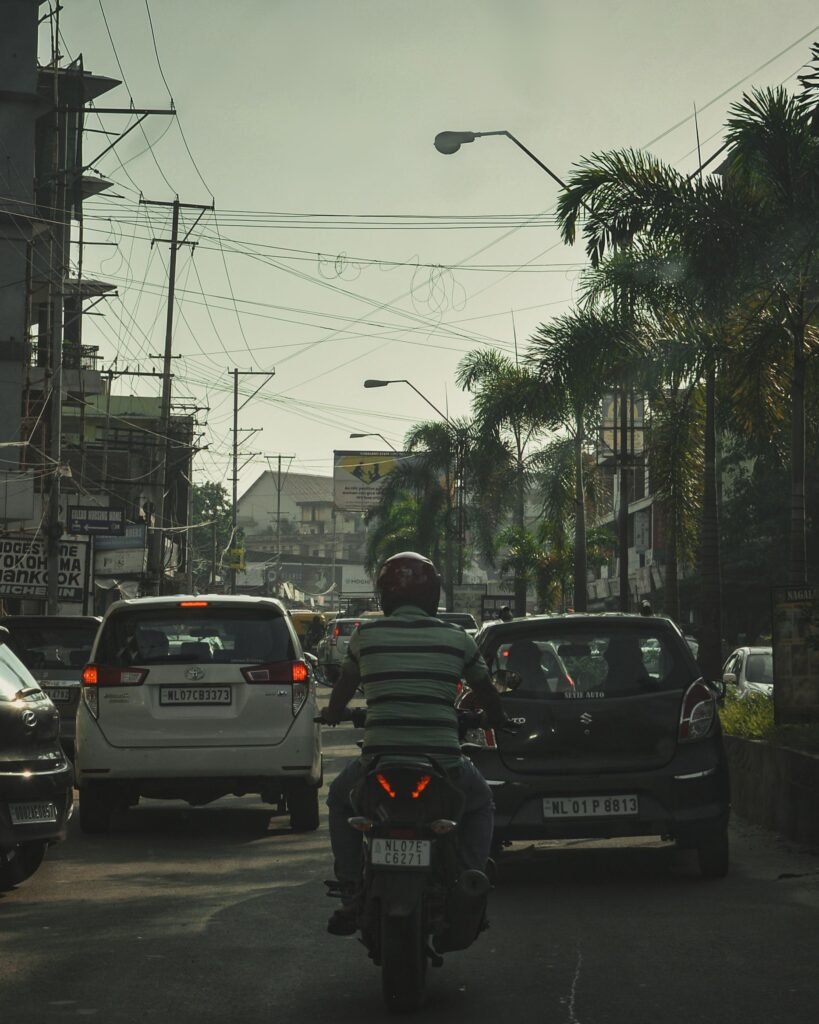
Photo: Votso Sothu · Pexels · Licence. Resized; not cropped.
Finding your bearings
Dimapur lies on the plains beside the Dhansiri and is an important commercial and transport centre. Its busy streets give you a different experience from Kohima, the hill capital. Come here for Kachari heritage, shopping and food, with a little time to see how the city works between journeys.
“Dimapur” can mean a surprisingly wide area in hotel searches and older travel descriptions. Chümoukedima and Niuland are now separate districts. Diezephe Craft Village, Nagaland Zoological Park and Seithekema’s Triple Falls belong in a Chümoukedima outing, even when a business address or old guide uses the Dimapur name.
Before choosing a room, locate three things on the map: your arrival point, the hotel and your next departure point. Central Dimapur suits the station, ruins and markets. A property towards the airport or the outward road corridor may work better for a flight or hill transfer. The exact locality matters more than the city label on a booking page.
Kachari history and the ruins
The Kachari Ruins
The Dimasa Kachari ruins are the city’s strongest reason to put history at the centre of your day. Their stone pillars have distinctive rounded, mushroom-like tops; some remain upright, while others survive in damaged form. Walk slowly enough to notice the differences in shape, carved detail and arrangement.
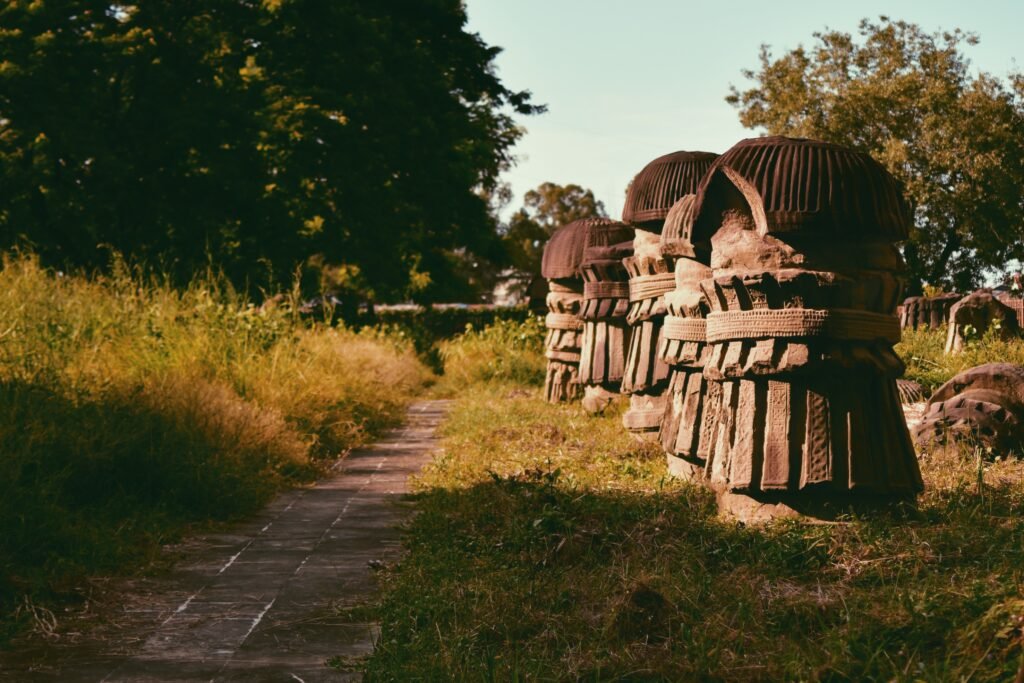
Photo: Mithun Katula (2018) · Source · CC BY-SA 4.0. Resized; not cropped.

The purpose of the pillars remains uncertain. You may hear a story that they were pieces in an enormous game resembling chess. Enjoy it as one interpretation rather than a settled account of what happened here. The surviving stones, the questions they raise and their connection to Dimapur’s Kachari past are interesting without a definitive explanation for every feature.
Read the interpretation at the site and give yourself time to look before moving on. With children, comparing the forms can be a good way to make the visit engaging. With a guide, ask what evidence supports a particular account and where local tradition fills the gaps.
The ruins make a natural main stop for a city half-day. Establish the opening arrangements before you set out, bring water and wear shoes that are comfortable on uneven ground. Keep off the stones, do not make rubbings or remove fragments, and avoid resting bags or bicycles against the remains. A gentle visit protects the details that make the place worth seeing.
The older city beyond the pillars
Dimapur was a Kachari capital. Its historical landscape includes traces of tanks, embankments and other structures as well as the familiar monoliths. Names such as Rajpukhuri and Padampukhuri preserve connections with the former royal tanks and help place the ruins within a larger city story.
If that history catches your interest, arrange a knowledgeable local guide for a deeper visit. Ask which remains can actually be seen, which names survive mainly in local geography and where public access is possible. An old place name on a map does not create a public walking route through a neighbourhood, private plot or waterbody.
This extra context suits travellers who would rather spend longer on one subject than add several unrelated stops. A good account should leave room for uncertainty. The questions around the stones and the changing city are part of the interest.
Markets, craft and everyday life
Hong Kong Market is a lively choice for browsing clothes, electronics, cosmetics and everyday goods. It shows Dimapur’s commercial energy rather than offering a neatly curated collection of local craft. Go if you enjoy looking around a working market, comparing styles and watching the city shop.
Circular Road offers another shopping area to explore. If a textile, basket or bamboo object catches your eye, ask where it was made and who made it. Local work, imported goods and mass-produced items can appear in the same shopping trip, so choose on the basis of the object and its provenance rather than the market’s name.
For a special purchase, take time over the weave, finishing and materials. Ask how to care for it and whether the design has a particular community or ceremonial use. Get a receipt for an expensive item, and settle packing or shipping arrangements before paying. These conversations can be as rewarding as the purchase itself.
New Market is worth considering if you are more interested in food ingredients and produce than souvenirs. A visit before lunch can give you things to ask about when you eat: what is in season, how a vegetable is prepared or how an unfamiliar ingredient is used. Keep access clear for shoppers, ask before photographing a seller and leave food handling to the people working at the stall.
Choose one or two areas rather than crossing the city repeatedly. A sensible day might begin at the ruins, pause for lunch and continue with whichever market best matches your interests. Agree a recognisable pickup point if you are using a vehicle, especially once you have shopping to carry. Contemporary clothes, practical purchases and an ordinary conversation belong to Dimapur as much as heritage souvenirs do.
Eating in Dimapur
Dimapur is a useful place to begin exploring Naga food because you can try local cooking alongside a broader urban restaurant scene. Bamboo shoots, smoked meat and fermented ingredients are things to look for and ask about, though no single meal represents every community or household.
Start with the day’s rice, vegetable and meat options, and ask the server how the dishes are usually eaten together. Find out how large the portions are before ordering a tableful. Keep very hot chilli accompaniments on the side at first; a little can change the whole meal. If a fermented flavour is new to you, asking about the ingredient and preparation is more useful than trying to order the most challenging dish.
A hosted meal can offer a different introduction when arranged in advance. Discuss the time, price and menu before the cook begins preparing. Give clear dietary information: vegetarian food may require a question about stock or fish as well as visible meat, and allergies need an explicit conversation about ingredients, sauces and shared preparation.
Make the travel-day meals easy. Ask your hotel about breakfast before an early departure and dinner after a late arrival. Buy snacks and drinking water before a long transfer, so a closed roadside stop does not determine when you eat. There is no need to make every meal an expedition; a relaxed lunch between the ruins and a market is a good use of a city day.
Arriving and travelling onwards
By air
Dimapur Airport uses the code DMU. Search and book for your actual travel date, checking the airline’s current schedule rather than planning around an old list of routes. Give your pickup driver the flight number and make clear how much luggage and how many passengers are travelling.
For an onward hill journey, work back from the realistic time you will be ready to leave the airport, not simply the scheduled landing time. Baggage, a meal and the road conditions all affect the start. A night in the arrival area can be a welcome choice after a late or tiring journey, with the hills left for the following morning.
Agree how to identify your driver and what happens if the flight is delayed. Keep the driver’s and hotel’s numbers available offline. On the return leg, allow a proper road buffer before airport check-in rather than treating the fastest map estimate as a promise.
By rail and road
Dimapur railway station, code DMV, brings you into the central city. Check the station name and code on your ticket: a rail booking for Nagaland does not necessarily mean arrival in central Dimapur. Let the person collecting you know the exact train and station.
The old NST bus stand near the railway station, the Purana Bazar terminal and onward taxi counters are useful orientation points. Departures, ticketing and the correct counter should be checked for your destination and travel day. With a shared vehicle, establish whether your seat is reserved, where to report and how luggage is carried. With an exclusive taxi, agree the route, pickup and whether the price includes waiting or a return journey.
The road towards Kohima continues through the Chümoukedima corridor. Build the day around current road advice, particularly after heavy rain. For a flight, train or important event, leave enough margin that an ordinary traffic delay does not turn the whole journey into a race.
Finding local help
The district describes tourist information facilities at the airport and the Senior Tourist Officer’s office in the Tourist Lodge premises, near the railway station and old NST bus stand. The official tourism office page is a useful place to find current contact information before visiting.
Bring specific questions. The correct onward counter, tomorrow’s opening arrangements at the ruins or a contact for a hosted craft visit are easier to answer than a request to organise every possible attraction. Your hotel may also help with a practical city route and a reliable collection point.
Where to stay
Choose the locality before comparing room photographs. Near the station and central streets, you can organise a city-focused stay around the ruins, markets and rail connections. Circular Road and nearby neighbourhoods provide another central area to consider. The airport and outward road corridor can suit a different priority, especially an early flight or onward transfer.
Three starting points in the official district accommodation directory are Hotel Acacia, opposite East Police Station; Lake Shiloi, near the Clock Tower; and Hotel Tragopan, on Circular Road. Use them as places to enquire rather than as a ranking or a promise of current room availability.
For a warm-weather stay, ventilation or air conditioning may matter more than decorative extras. If rest is the priority, ask where the room sits in relation to the road and any event space. Lift access, power backup, bathroom layout and breakfast time are worth discussing where they affect your comfort.
An early train arrival does not necessarily come with early hotel check-in. Arrange a room from the time you need it, or agree where you can leave bags and freshen up while waiting. For the night before departure, a dependable pickup and enough sleep can be worth more than a small saving at a less convenient address.
When to visit
Cooler weather makes the ruins and market walks more comfortable. In hotter months, put exposed sightseeing earlier in the day and leave room for a proper indoor break. During wet weather, shorten the walking loop and carry rain protection; the same day can still work well with a longer lunch and less time moving between shopping areas.
Many visitors pass through Dimapur on their way to Hornbill Festival. Its principal venue is Kisama near Kohima, so a Dimapur hotel is an arrival base rather than a room beside the festival ground. If you want several festival days, compare the repeated road journeys with staying closer to Kisama.
Concerts, fairs and community celebrations in and around the city have their own calendars. Use a current announcement for the event you hope to attend. A public concert and a private community observance call for different arrangements, even when both appear in travel photographs from the same season.
Three ways to use your time
A half-day between journeys
Leave your bags somewhere agreed, visit the ruins if the opening arrangements fit and have a meal before collecting your luggage. One short market stop can be added if the connection remains comfortable. Keep the pickup settled and be willing to drop sightseeing if the inbound journey is late. This should make a transfer day more enjoyable, not more anxious.
A full city day
Begin with the Kachari ruins, taking enough time to look closely and read the interpretation. Continue to lunch, then choose Hong Kong Market, Circular Road or New Market according to what you enjoy browsing. Leave the late afternoon for a more focused craft purchase, another meal or rest. Spend the night and begin the next stage of Nagaland travel refreshed.
Two days with a neighbouring-district outing
Keep the first day for city heritage and shopping. On the second, arrange a craft visit at Diezephe or a family outing in Chümoukedima, with a return vehicle to your hotel. Triple Falls needs a separate decision based on weather, access and the group’s walking ability; it should not be added simply because it appears on the same map. You can keep one hotel for both days while visiting two distinct districts.
Permits, costs and practical care
Check the official Nagaland ILP portal for your visitor category before travelling. Foreign visitors should obtain current Protected Area Permit and registration advice from the responsible authorities; the district directs visitors to the e-FRRO portal. Do not rely on an older claim that arrival in Dimapur removes permit obligations.
Budget separately for the room, airport or station transfer, city transport, meals, entry charges and shopping. For an onward taxi, clarify waiting, luggage and driver expenses, especially if you change the pickup address. Keep some contingency for an extra night if a connection moves. Old published fares are not a substitute for an agreed current quote.
The plains setting does not guarantee step-free travel. Market surfaces, crossings, station access and hotel stairs may be awkward for someone with limited mobility. Ask for entrance photographs, details of the lift where needed and a clear vehicle drop-off point. A shorter shopping loop with a seated meal can make a better day for families and anyone who tires easily.
Keep identification, tickets, medicines and contact details in your hand luggage, with essential information saved offline. Use ordinary care with cash and valuables in busy areas. If a medical need affects the trip, establish the relevant facility and services directly rather than relying on a map label.
A few common questions
Is Dimapur worth an overnight stop?
Yes, if you would enjoy the ruins, food and markets, or need a restful break between services. Continue directly to the hills if those are your main interest and your arrival time and transport make the onward journey comfortable.
Are Triple Falls and Diezephe in Dimapur district?
They belong to Chümoukedima district. You can visit from a Dimapur base, but plan the transport and time as an outing beyond the city.
Is Dimapur the capital of Nagaland?
No. Kohima is the capital. Dimapur is an important commercial centre and arrival point, with a different setting and character.
Were the Kachari pillars giant chess pieces?
That is a popular interpretation rather than an established purpose. The district’s own account acknowledges uncertainty about the pillars.
Sources and useful references
Research checked on 28 October 2026 using Dimapur district information on the Kachari ruins, city history, travel and entry arrangements and accommodation, together with Incredible India’s shopping overview and food guide. Directory entries are starting points for direct enquiries, not live availability checks.