
The best trek for your Nagaland trip depends on what you want to spend time doing. Dzükou invites you into a rolling valley landscape. Japfü gives a Kohima-area journey a summit objective. Saramati draws you much farther east for a mountain trip of its own, while Kapamodzü can pair a hill walk with time in Zhavame.
For a first visit based around Kohima, begin with Dzükou or Japfü. If you are travelling through the Pfutsero–Zhavame area, look at Kapamodzü. Choose Saramati when you are ready to build the itinerary around the mountain, including the road journey, local support and time to adapt.
Four different kinds of walking trip
Use this comparison to choose the kind of experience you want, then discuss the actual route with a local guide. These are planning distinctions rather than fixed difficulty grades: the starting point, weather, pack weight and overnight arrangement can change the effort considerably.
| Destination | What draws visitors | Where it fits | The key decision |
|---|---|---|---|
| Dzükou Valley | Bamboo-covered folds, streams and time in a high valley. | A dedicated walking block within a Kohima-area trip. | Which approach and whether an overnight gives you enough valley time. |
| Japfü Peak | A summit outing, with forest and botanical interests too. | A separate mountain day from the southern Kohima area. | Summit, shorter forest walk or a specifically arranged rhododendron visit. |
| Saramati | A substantial eastern Nagaland mountain journey. | A trip built around Kiphire district and the local mountain base. | The complete supported itinerary, including altitude, access and spare time. |
| Kapamodzü | A hill outing connected with Zhavame’s village and farming landscape. | A Pfutsero–Zhavame stay in Phek district. | The operating roadhead and the amount of walking your group wants. |
Instead of asking only which trek is easiest, ask the guide to explain the ascent, ground underfoot and return from the starting point you will actually use. Give an honest picture of the least experienced walker’s recent outings. A plan suited to the whole group leaves more time to enjoy the landscape.
Dzükou: time in a high valley
Dzükou lies along the Nagaland–Manipur boundary. Its rounded hills, low bamboo and seasonal flowers give the walk a different character from a summit climb. The destination is the valley landscape itself, so leave time after the approach to settle in and look around.
From the Nagaland side, discuss Viswema and Jakhama with your guide. The roadhead and any vehicle-assisted section affect the distance you will walk, while a shorter, steeper option may be harder on tired legs. Ask about both ascent and descent rather than choosing from a single advertised kilometre figure.
An overnight is a useful first option to explore. It separates the walk in from the return and can leave a quieter afternoon or morning in the valley. Confirm the actual sleeping arrangement, bedding, toilets, food and treated water before booking. A day trek can work for a suitable group, but compresses the walking and sightseeing into a longer day.
Arrange an authorised local guide. SAYO’s guide requirement introduced in October 2025 was reaffirmed in a February 2026 notification reported after a wildfire and reopening. Get the latest local instructions for your route, including entry restrictions and any changed overnight arrangements. The dated reopening does not establish access on your travel date.
Choose Dzükou if you enjoy sustained uneven walking and want the landscape to be the main event. If you have only a few spare hours between transfers, choose a shorter local outing and save the valley for a trip with more room.
Japfü: a mountain day near Kohima
Japfü rises above Kigwema, south of Kohima, and is listed by the district at 3,048 metres. It offers a summit-focused outing, with forest and rhododendron interests that may call for a different route or a slower pace.
Decide on the objective with the guide before agreeing a departure time. A climb to the summit, a forest walk and a visit to a notable tree are not necessarily one itinerary. If you mainly want to explore plants or take photographs, a shorter planned walk may give you more of what you came for.
For a summit attempt, keep the top optional and the descent central to the plan. A group can feel strong early on and still find the return tiring, particularly on slippery or uneven ground. Agree a turnaround time and the conditions that would bring it forward.
Sunrise is not an essential part of the experience. It adds darkness and timing pressure, so discuss it carefully if the route is unfamiliar. A daylight outing may suit a first visit better and still leave plenty to enjoy.
Some operators combine Japfü and Dzükou. Ask for the exact stages, authorised connection, sleeping places and support arrangements, then compare that with separate outings and a rest interval. Proximity alone is not a reason to make the trip harder.
Choose Japfü if a sustained mountain day appeals and you are comfortable turning back when conditions or energy call for it. Choose a shorter forest objective when that better matches the group.
Saramati: build the trip around the mountain
Saramati lies near Thanamir in Kiphire district, on the India–Myanmar border. This is eastern Nagaland, well beyond a casual addition to a short Kohima holiday. Its forested mountain setting and height above 3,800 metres make the journey a distinct commitment.
Begin with an experienced local organiser who can set out the whole sequence: reaching the base, preparing, walking stages, overnight locations, descent and onward travel. The number of trekking days in an advertisement is not the number of days needed from your arrival in Nagaland to your departure.
Discuss who supplies shelter and food, what you carry, the guide team’s responsibilities and the plan if someone cannot continue. Communication and assisted return need practical explanations, especially where a mobile signal cannot be relied on. An emergency number by itself is not a support plan.
Altitude deserves attention as well as fitness. Ask for each night’s sleeping elevation and a gradual acclimatisation plan, and discuss the itinerary with a travel-health clinician. Fitness does not protect against altitude illness. After ascent, headache with nausea or dizziness means you should stop ascending and alert the guide; worsening symptoms call for descent. Confusion, poor coordination or breathlessness at rest require urgent medical help and assisted descent.
The district’s broad seasonal advice points to October and November and notes winter snowfall. Treat that as orientation rather than a promise of dry paths or a snow experience. Get a current route assessment before paying and again before departure, with flexibility for both road and mountain conditions.
The border setting adds an access question. Have the organiser confirm the permissions for your nationality and intended route with the competent authorities. A trekking reservation, a state-entry permit and permission for a particular border area are different things. Stay within the authorised route; an online track continuing over a boundary does not make that crossing permissible.
Choose Saramati if the mountain is a principal purpose of the holiday and you have relevant walking experience, suitable support and time to adapt. Its reward should be the whole journey, rather than a summit squeezed into a route that cannot absorb a delay.
Kapamodzü: a hill walk with a Zhavame stay
Kapamodzü is associated with Zhavame in Phek district. The village sits below the mountain and is known for farming, including vegetables. That pairing gives the trip a different balance: time with a village host and the agricultural landscape, alongside a hill outing.
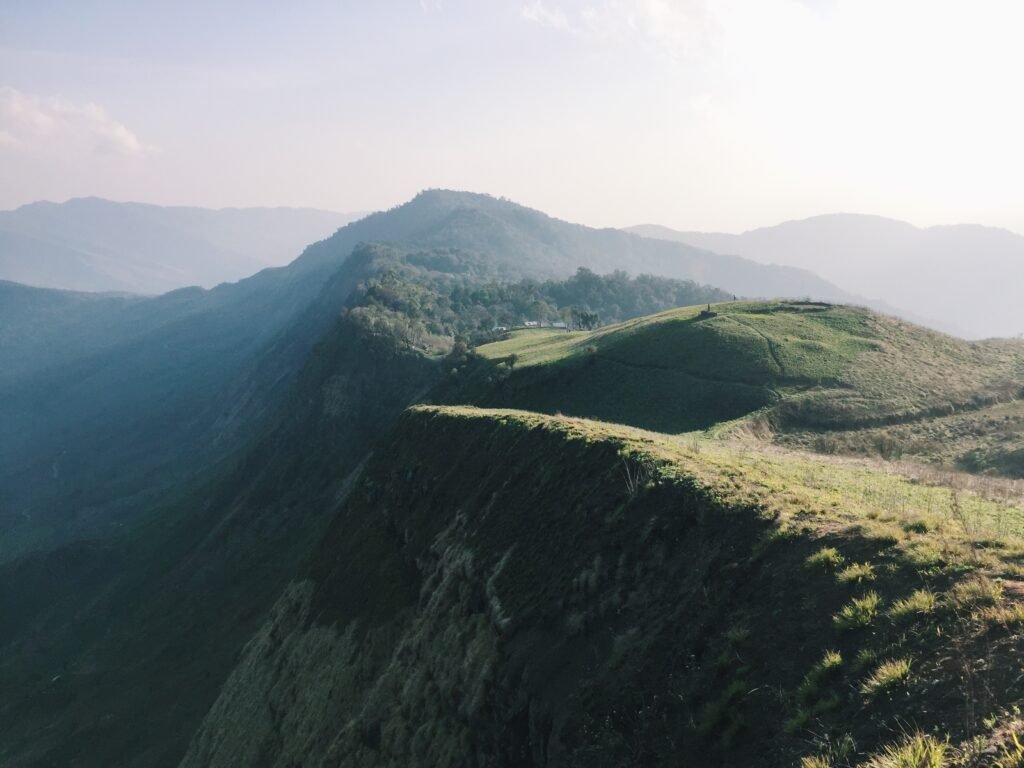
Photo: Suduvelu Rhakho (2017) · Source · CC BY-SA 4.0. Resized; not cropped.

It is especially worth considering when your itinerary already includes the Pfutsero–Zhavame area. Ask where the walk begins, how far the vehicle can go and what route is suitable for your group. Two people may describe very different effort levels because they began from different places.
Older tourism descriptions include short walking estimates and a camping itinerary. Neither establishes today’s roadhead, walking duration or campsite permission. A current local plan is more useful than the label “easy”, particularly for children, older travellers or anyone with limited hill-walking experience.
Keep the village stay intentional. Arrange meals and accommodation, then ask what your host would enjoy sharing about the season’s work or local food. Use agreed paths around fields rather than stepping through crops for a better view.
If camping is proposed, establish the authorised site, water, toilets, waste arrangements and a weather alternative. A confirmed village room with a suitable return walk may be simpler and more comfortable than an overnight on the hill.
Choose Kapamodzü if you want to combine the Zhavame area with a hill landscape and can shape the walk around the current approach. Its flexibility is something to discuss with a guide, not a guarantee that every version suits everyone.
Choosing your season and leaving room to adapt
Start with the kind of landscape you want: flowers, forest, clear-distance views or a cooler-season walk. Then ask what that means for the actual route and overnight comfort. Someone happy on a cool day walk may feel very differently about a cold night in basic shelter.
Recent rain, wind, visibility and trail damage matter more to the day’s decision than a general “best season” label. Flower and snow photographs record particular moments, not conditions included in a booking. A useful organiser will help you choose an alternative when the main outing is unsuitable.
Road access is a separate part of the same conversation. Confirm the approach with both driver and guide before relying on an early trailhead arrival. A restoration target is not an opening notice, and a mountain booking does not establish that the planned transfer can run.
Keep the trek’s return separate from an important flight, train or event wherever possible. A spare day can serve as recovery in good conditions and as useful flexibility when a slower road or weather change affects the plan.
Choosing an organiser and comparing quotes
Ask each provider for the same basic outline: the start and finish, walking stages, group size, guide arrangements and overnight facilities. You should be able to picture the journey and know who is responsible for making decisions along it.
Then compare the total cost for the same number of people and the same inclusions. Transport, guiding, meals, local charges, equipment and accommodation may be priced per vehicle, per group or per person. A low guide-only price and an all-inclusive private trip are not equivalent offers.
Overnight arrangements deserve specific names and descriptions. Establish the shelter, bedding, toilets, water and meal plan, along with what you will carry. Ask about communication, first response and how an early return would be handled; these are particularly important on the more remote Saramati itinerary.
Finally, read the terms for road delays, closure, weather cancellation and changing to a shorter outing. No universal tariff is quoted here because the exact route and support change the product. Verify the payment recipient directly with the business and retain a written confirmation of what has been reserved.
Getting ready for the walk
Tell the guide about the longest uneven walk you have recently completed, whether you regularly climb and descend hills, and whether you have carried an overnight pack. Mention injuries or limitations that could affect the day. These details make route selection much more useful than simply describing yourself as fit.
Use a route-specific equipment list. Footwear with grip, rain protection, warm layers, a headtorch, personal medication, sun protection and dry storage for essentials are common starting points. Confirm what the organiser supplies rather than assuming a hired tent comes with suitable bedding and a sleeping mat.
Agree drinking-water quantity and treatment, packed food and any dietary requirements before departure. Keep small essentials accessible and avoid carrying equipment simply because it appears on an unrelated trek’s packing list.
Travel with a shared expectation that turning back is an ordinary mountain decision. Follow the guide’s regrouping plan and make sure an exhausted or unwell person has appropriate support, rather than sending them alone down an unfamiliar route.
Care for the places you walk through
Use agreed paths, take rubbish back and follow local fire, camping and toilet arrangements. Leave flowers, plants and stones where they are. Food scraps do not belong beside the trail or in places where they encourage wildlife to approach visitors.
Pay fairly for local guiding and hospitality. Ask before photographing people, homes and working fields, and keep sensitive wildlife locations private. The people who organise access and host travellers remain responsible for these landscapes long after a trekking group has left.
A few common questions
Which trek suits a beginner?
Start with the person, route and current conditions. A suitably short guided walk is often a better first conversation than choosing a mountain name. Dzükou’s popularity and Kapamodzü’s flexible approaches do not make every itinerary beginner-friendly.
Can I trek without a guide?
Use a locally knowledgeable guide and establish the rules for the exact route. Dzükou has specific community guide requirements; older independent accounts do not provide current permission.
Can I combine trekking with Hornbill?
Yes, with separate time for the trek, recovery and festival days. Avoid finishing a demanding walk immediately before a fixed departure or a performance you cannot miss.
Sources and further reading
Research checked 28 October 2026. Confirm date-specific opening and booking arrangements with the relevant host or custodian.
- Incredible India: Dzükou valley
- Kohima district: Dzükou and Japfü
- SAYO notification reported in February 2026
- Nagaland DIPR: Japfü above Kigwema
- Kiphire district: Mount Saramati
- Kiphire district: Saramati seasonal context
- CDC Yellow Book: high-altitude travel
- Nagaland Tourism: Zhavame
- Nagaland Tourism: Zhavame and Kapamodzü itinerary